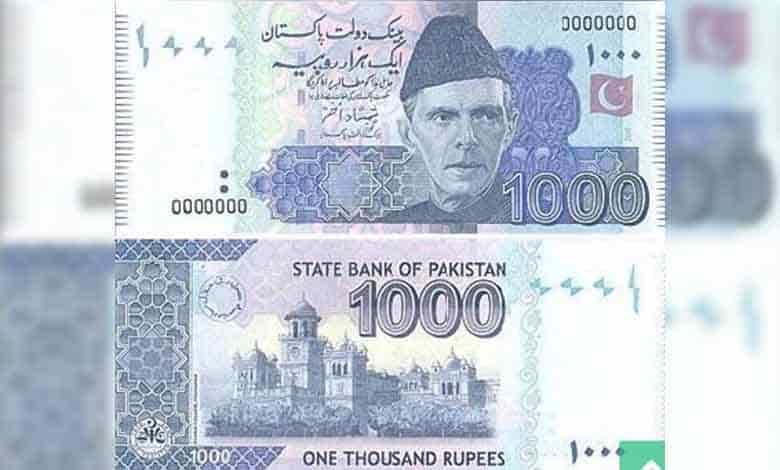
Is there a Turkish Flag on a Pakistani Banknote?

Rating:
- The claim that Pakistan has a Turkish flag on its money is FALSE.
- The red color appears due to the reflection of the ink on the banknote in the light.
- Since the money was thought to have been printed incorrectly, Pakistani authorities launched an investigation into this matter.
You may have heard many stories about Turkey’s good relations with Afghanistan and Pakistan since World War I. Of course, some of these are not related to the truth, they are pure nonsense made up by someone for the purpose of heroism…
Recently, we came across interesting information shared by internet users. The information that the Turkish flag is on Pakistan’s money is quite common. In addition, the claimants added that Pakistan is the only country that does not recognize Armenia.
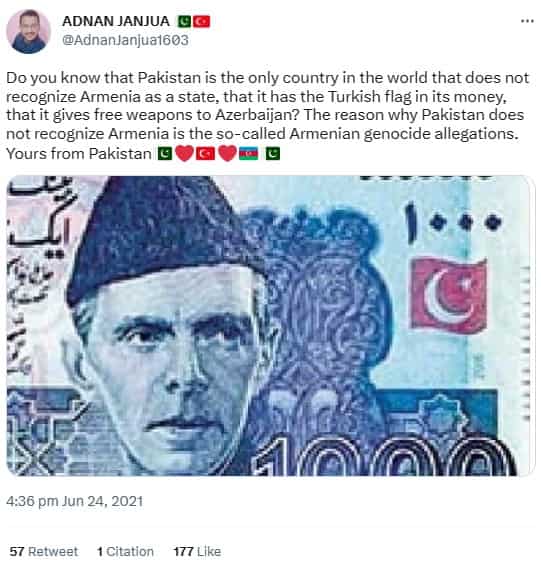
We see that Ali Şahin, former deputy of the AK Party Gaziantep and former Deputy Minister of the European Union, made a similar sharing.
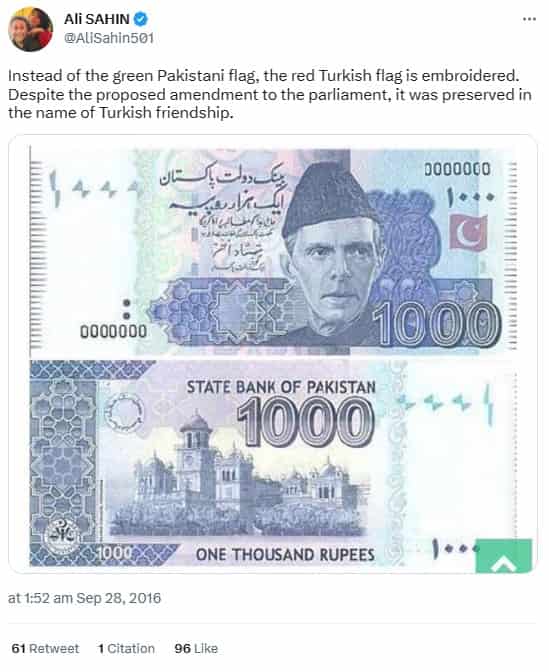
We magnified to find out if this information, which has been shared over the years, is true.
Turkish Flag Image on Money, Due to Misprint
When we search for the subject on Google with keywords such as “Pakistani money”, and “Turkish Flag”, we reach the news of Hurriyet.com dated 10 August 2007. The source states that the money was erroneously printed in the following terms:
When Pakistan changed the design of the 1000 Rupee banknotes it has been using since 1988, a new debate started in the country. The new coin of Pakistan retains the portrait of the famous leader Muhammad Ali Jinnah as before, while the new banknote has a Pakistani flag that was not present in the old coin.
However, in the new banknotes, the flag of Pakistan, which consists of a white crescent and a star on a green background, was placed on a red background, not green, but a star and crescent. Debates began in Pakistan, “Is this the flag of Pakistan or the flag of Turkey?”
According to reports in the Pakistani media, Rasheed Akbar Khan, a member of the Pakistani Muslim League, described the fact that the flag on the new banknotes had a red background, not a green one, as a “big mistake” and asked for it to be corrected.
As a result, we reach this information that the flag over 1000 Rupees, which has been in circulation in Pakistan since 1988, was inadvertently printed contrary to the claim.
Then we search for this information with Urdu keywords. Here is the BBC’s website that broadcasts in Urdu in Pakistan. Here again, it is stated that he was wrong and that the relevant authorities started an investigation on this issue. In other words, as Ali Şahin stated, the information that this situation is preserved in the name of Turkish friendship is not true.
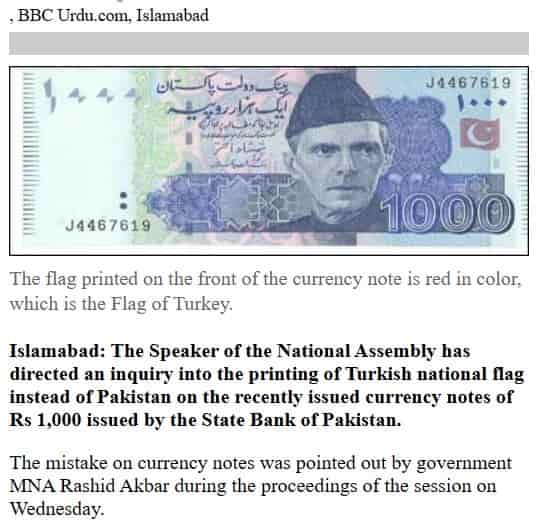
However, Pakistan’s central bank also approves this. When we examine the banknotes on the official website of the central bank, we do not come across such an expression in the description of 1000 Rupees.
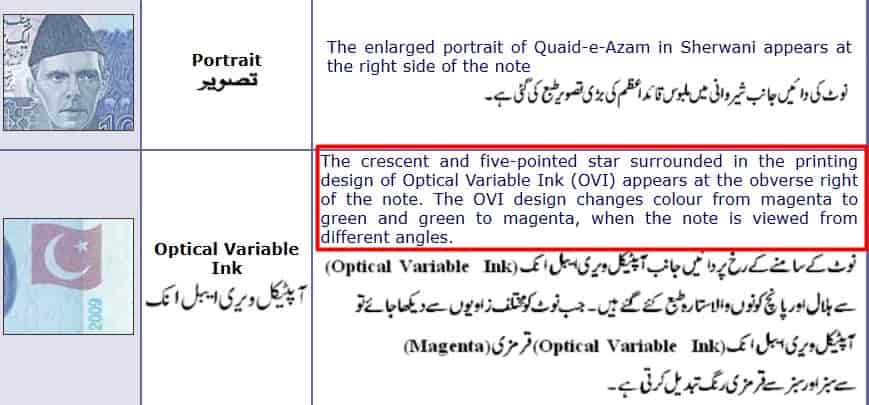
It is possible to reach all the details on the 1000 Rupee banknote on the website of the Central Bank of Pakistan. In the alleged part of the Turkish flag, officials said it was an optical illusion caused by ink. We can compare this to the reliefs on the Turkish Lira banknotes, which perceive their color differently according to the light.
Pakistan Is The Only Country That Does Not Recognize Armenia
We have concluded the claim that the 1000 Rupee banknote in circulation in Pakistan has the Turkish Flag on it. However, another view was dominant in these tweets: “Pakistan does not recognize Armenia”.
On the other hand, we see that the claim that Pakistan is the only country that does not recognize Armenia is “true”. Pakistan does not recognize it as a country with the idea that Armenia occupied the lands belonging to Azerbaijan. Therefore, the two countries do not establish international relations with each other. The phrase is quoted in the Urdu publication of The Independent Urdu as follows:
Azerbaijan and Armenia waged a war over the Nagorno-Karabakh issue in October 2020. Pakistan is the only country that does not recognize Armenia due to Armenia’s occupation of this part of Azerbaijan.


